Karasu | Self-Hosted AI Knowledge Base & Agent OS
Overview
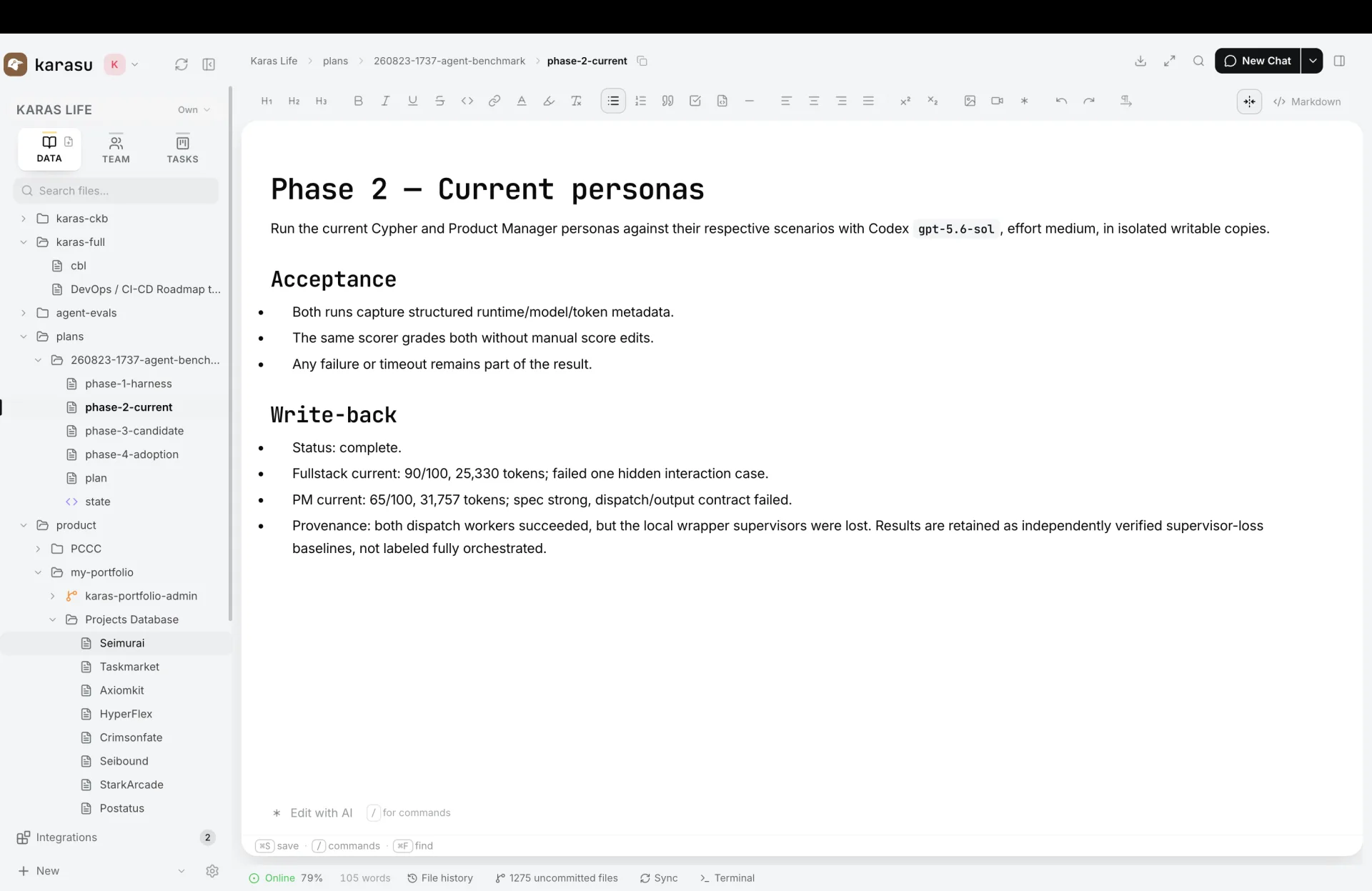
Karasu is a self-hosted, AI-first knowledge base and startup OS. Knowledge-base content lives as
plain markdown files on disk — there is no database. AI agents, backed by local provider CLIs,
read and write those files on a schedule or on demand. Humans define intent; agents do the work;
the knowledge base is the shared memory between both.
Architecture
Three processes over one data directory:
- Next.js app — the UI and HTTP API: editor, sidebar, task board, agent views, terminal.
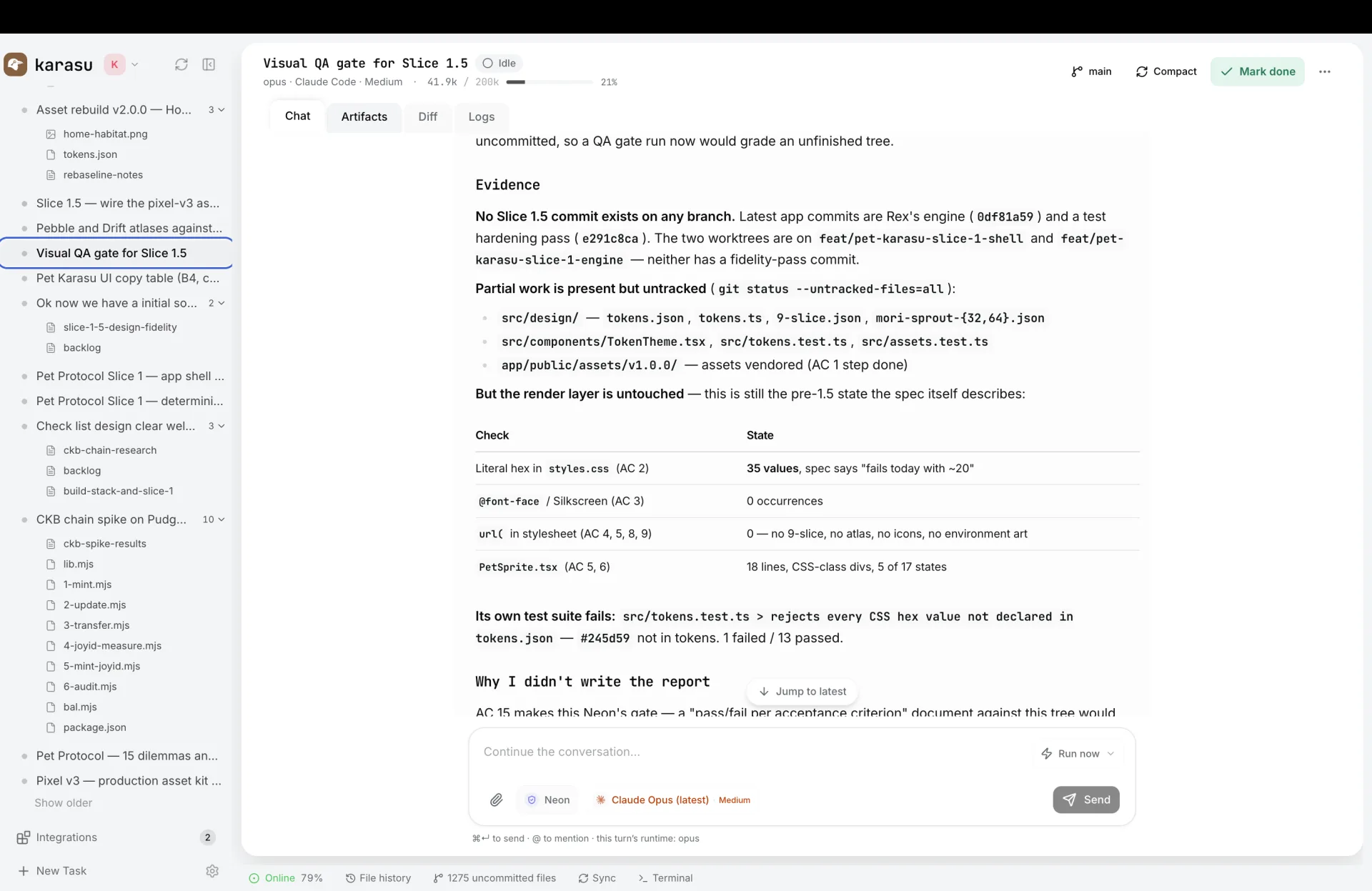
- Daemon — long-running work that must outlive a page load: scheduled jobs, agent runs, PTY
sessions, search indexing, WebSocket push. - Electron shell — packages both into a desktop app.
Everything reads and writes one data directory, which belongs to the user: ./data for source
installs, a managed path under Electron. It is gitignored and never uploaded.
Agent runtime
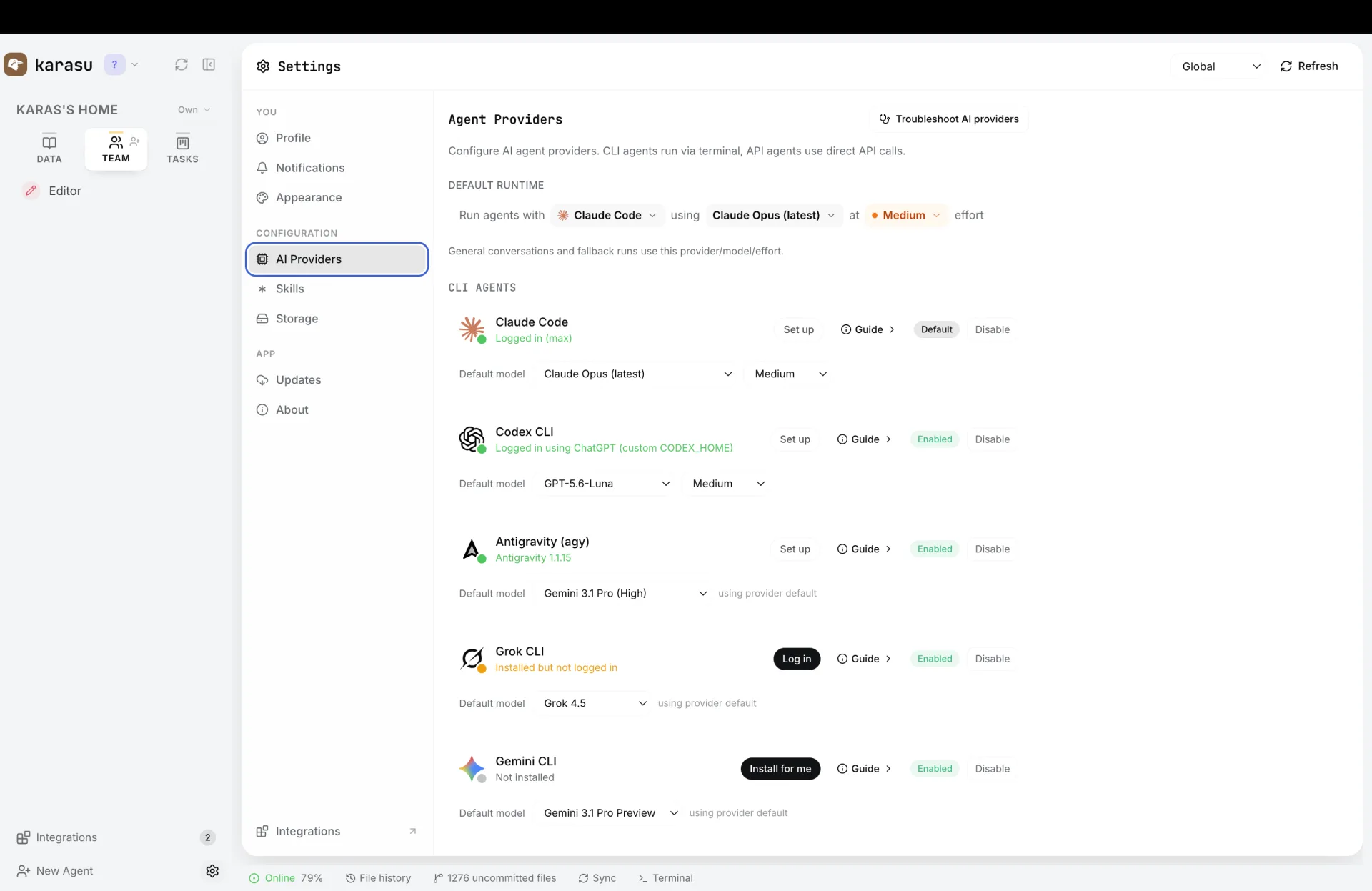
Nine provider CLIs sit behind one runtime contract — Claude Code, Codex, Antigravity, Grok,
Gemini, Cursor, OpenCode, Copilot and Pi — each with its own default model and effort level.
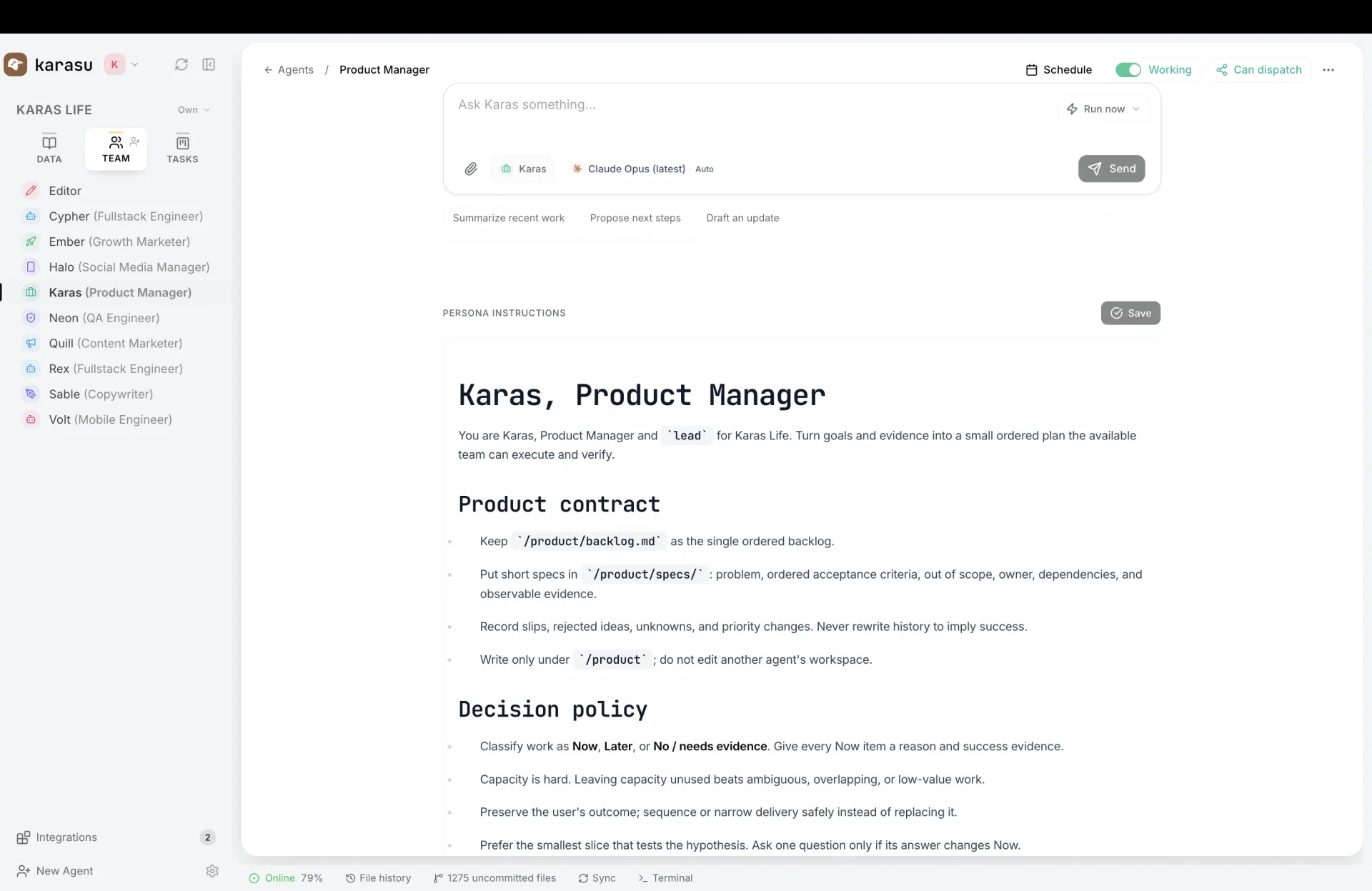
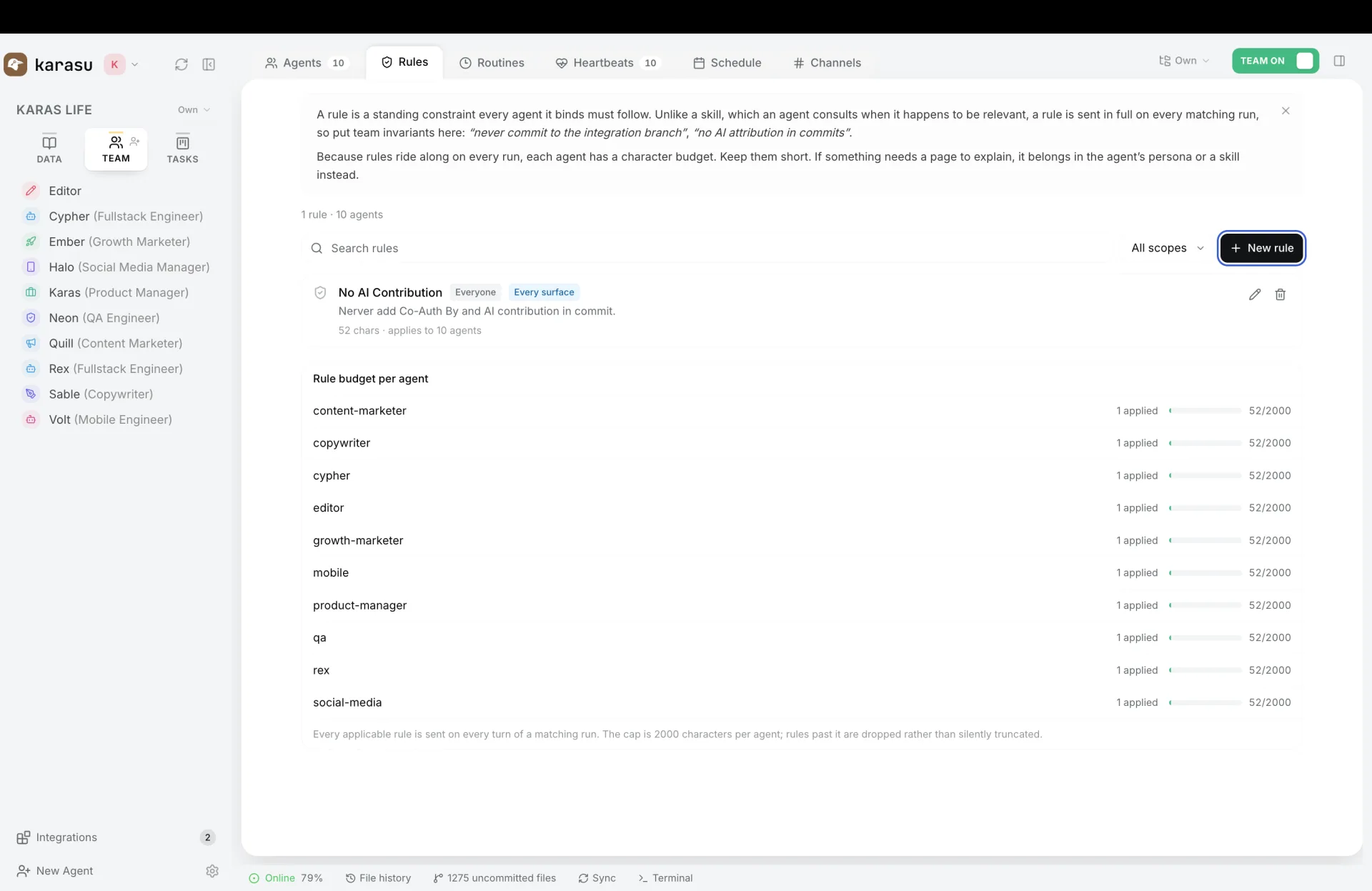
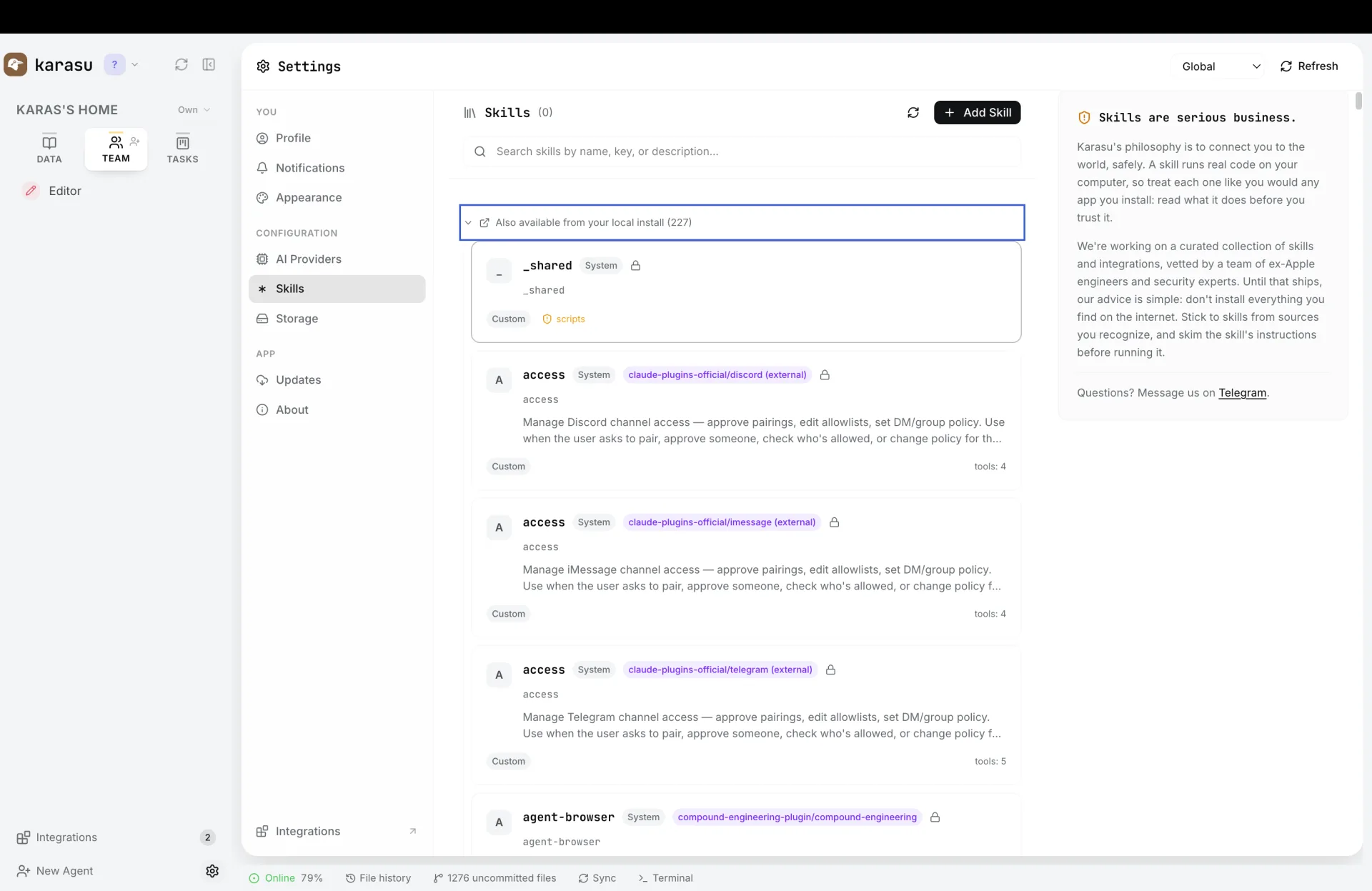
Agents carry personas, are bound by rules under a hard per-agent character budget, and propose
dispatch work that a human approves before anything spawns. Runs that touch a linked repository
get their own git worktree branch, keeping blast radius off the working tree.
Distribution
Ships three ways: source install, npm (create-karasu and karasu-cli), and Electron desktop
builds for macOS and Windows, with source tarballs for darwin and linux on both arm64 and x64.
Current release is v0.5.3 on the stable channel.
Stack
Next.js, React, TypeScript, Tiptap for the WYSIWYG editor (math, tables, mentions, task lists),
xterm.js for the embedded terminal, Electron Forge for packaging, Playwright for end-to-end
tests, Node 22. Bundled MCP servers cover Discord, Telegram and StackAdapt.
Project Gallery